

Soho Nights
A Soho Night Out for People Who Hate Clubs But Still Want a Proper Night
A sharper guide to Soho nightlife for people who want music, atmosphere and a late finish without surrendering their evening to a crowded club.
A night out in Soho does not have to mean losing your friends to a dance floor.
There is a particular kind of Londoner who wants a proper night out and still feels their soul leave their body at the words "let's go clubbing".
Not boring. Not antisocial. Not secretly desperate to be home by ten with herbal tea and a crime documentary. Just unwilling to spend the best part of Saturday night in a room where conversation is illegal, the floor is adhesive, and someone keeps elbowing your ribs while pretending it is dancing.
Soho is full of these people. You can spot them outside bars at 10.48pm, holding a drink they have stopped enjoying, trying to look game while calculating the emotional cost of the next venue. They like music. They like people. They like a late finish. They simply do not want a night that requires shouting "WHAT?" into a stranger's ear until 2am.
The good news: Soho has always been bigger than clubs. Its real magic is not one format. It is the feeling that the night might still turn into something. A side street. A basement door. A room with low light. A table full of drinks. The right song at the wrong time.
For groups who want that feeling without the club machinery, private karaoke in Soho is the sharper move. It gives the night a pulse, but not a crowd problem. It gives you music, but lets you choose the damage. It gives you privacy, which is the rarest luxury in London nightlife.
The club problem nobody says out loud
Clubs promise release. Sometimes they deliver it. Sometimes the room opens, the bass lands, and everyone stops thinking for a while. Lovely. Useful. Ancient human behaviour with better lighting.
But plenty of group nights do not need a club. They need somewhere the birthday person can actually hear their friends. Somewhere the colleague who came straight from work does not have to guard their tote bag like a museum object. Somewhere the person with social battery issues can sit down without seeming like they have betrayed the cause.
Most club nights also have a sorting effect. The dancers vanish first. The bar queue people become their own colony. The smokers form a breakaway government outside. The friend who says "I'll find you" will not find you. By midnight, the group chat has become a live emergency service.
That can be funny once. It is less funny when the whole point of the night was to be together.
Private karaoke keeps the group in one room and still lets the night get loud. That is the key. It is not the polite alternative. It is the controlled burn. You still get chaos, only the chaos has seating, drinks, and a door that closes behind you.
Nobody hates nightlife. They hate bad logistics with a bassline.
Soho Snapshot: the almost-club night
Three friends stand outside a bar near Wardour Street. One is saying the club will be "fun once we get in". One is already checking the last train. One has just admitted they cannot face another queue. Across the road, a basement sign glows gold through the rain. The night changes its mind.
What people actually want from a proper night out
People say they want to go out. What they usually mean is more specific.
They want a shift in atmosphere. A reason to dress with slightly more intent than usual. A place that makes the week feel far away. They want stories. They want a bit of theatricality. They want to laugh in a way that feels different from pub laughter. They want the group to become more interesting than it is in daylight.
A club can do that, but it is not the only machine.
A private karaoke room does it through participation rather than endurance. The night asks something from the group, but not too much. Pick a song. Hold the mic. Add a harmony that should probably be investigated by authorities. Cheer for someone who has surprised everyone by being excellent. Watch the quiet person reveal a voice that makes the table go still for half a second.
That is a night out. Not passive. Not polished. Not just standing around with drinks while the venue performs atmosphere at you.
Karaoke works because it gives adults permission to be briefly less edited. Soho helps because it already feels like a stage set for that sort of behaviour.
Why private karaoke suits club-avoiders
The club-avoider is often misunderstood. They are not always shy. Some are loud. Some are funny. Some are excellent company until they are asked to enter a room with strobe lighting and a toilet queue that looks like a hostage situation.
Private karaoke suits them because it keeps the good parts of going out and removes the parts that make people quietly miserable.
You get music without surrendering the playlist. You get late-night energy without losing your table. You get movement without being trapped on a dance floor. You get sociability without constant stranger contact. You get the emotional rise of a big chorus without somebody spilling a vodka cranberry down your sleeve.
Most importantly, nobody has to perform coolness.
Clubs often reward a certain facial expression: unbothered, vague, lightly severe. Karaoke rewards commitment. Bad singing with courage beats stylish boredom every time. A group that would stand awkwardly in a club can become completely alive in a private room because the rules are clearer and sillier.
This is why group nights out in London often work better with a private activity at the centre. The room gives people a job. Not a difficult job. Just enough structure to stop the night dissolving into phone-checking and venue debates.
Karaoke Personality Card: The Club Refugee
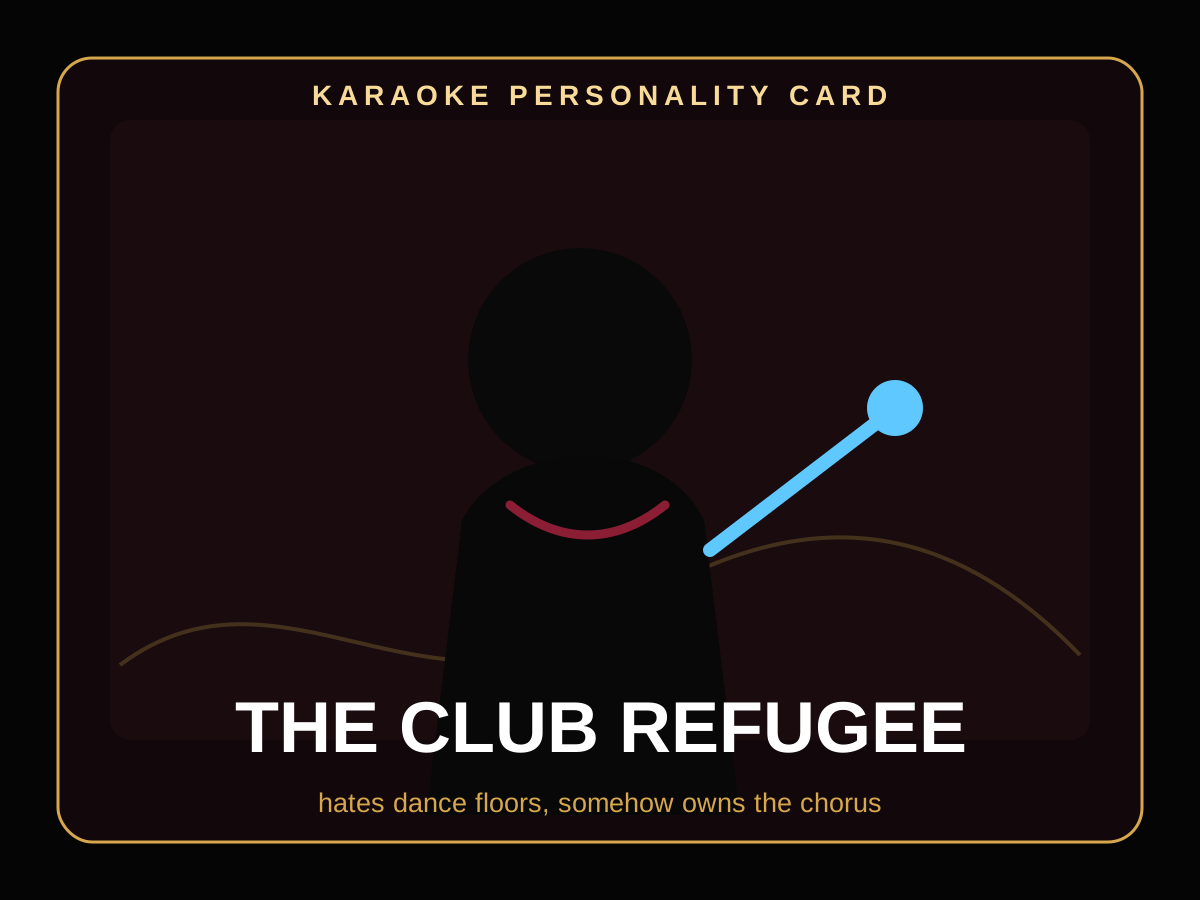
Signature phrase
"I do not really do clubs."
Known behaviour
Arrives relieved, sits near the edge, claims they will only watch, then requests a song from 2006 with alarming certainty.
Value to the room
High. They bring taste, sarcasm, and the sort of unexpected vocal commitment that makes everyone reconsider them as a person.
The night can still be late
There is a strange moral pressure around London nightlife. If you do not want a club, people assume you want an early night. This is false and unfair to many excellent degenerates.
Some people want to stay out late. They just want to do it somewhere they can still recognise their friends.
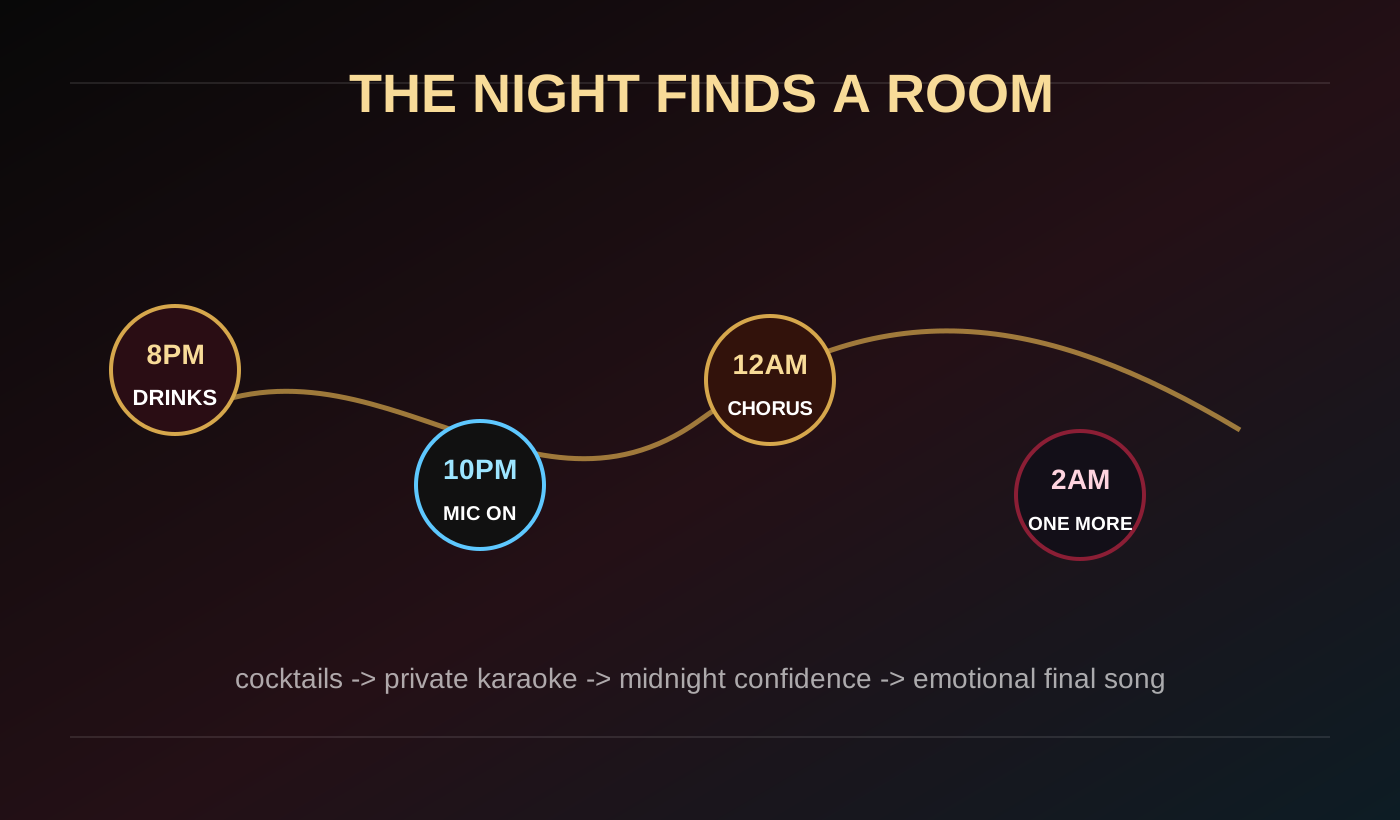
Soho is ideal for this middle ground. You can start with dinner or cocktails, move into karaoke rooms in Soho, then let the night decide how ambitious it feels afterwards. Nobody has to commit to an entire club arc. Nobody has to admit defeat at 11.30pm. The room gives the evening its second act.
Late-night karaoke has its own mood. Earlier in the evening, people choose songs strategically. After midnight, the strategy collapses. Someone adds ABBA while pretending it was ironic. Someone chooses Adele and makes direct eye contact with nobody. Someone who has been quiet all night suddenly sings the first verse of a power ballad with the focus of a person defusing a bomb.
This is not clubbing. It is stranger, funnier, and often more revealing.
For late-night London, that matters. A city does not only need louder rooms. It needs better ones.
A better plan for birthdays, work nights and mixed groups
The anti-club night becomes especially useful when the group is mixed. Birthdays with friends from different eras. Work socials with colleagues who should not be left alone with a nightclub booking. Hen dos where half the group wants glamour and the other half wants somewhere to put a coat.
Private karaoke gives everyone a way in.
The extroverts take the mic early. The observers control the queue. The music people become consultants. The funny people heckle gently from the banquette. The sentimental people wait until the room is soft enough for a song that should come with a warning.
In a club, these personalities scatter. In a karaoke room, they become a cast.
That is why birthday karaoke in Soho and hen do karaoke in Soho have such strong group logic. They do not rely on everyone wanting the same thing at the same moment. One person can sing, two can film, three can laugh, one can order drinks, and the person who "needed a quieter one tonight" can still be part of the story.
The room holds all of it.
The Soho version of not clubbing
Not clubbing in Soho should not mean retreating from the night. It should mean choosing a better shape for it.
There are ordinary alternatives: dinner that ends too early, a pub that becomes too crowded, a cocktail bar where everyone sits in a line and talks only to the person nearest them. Fine, but not always enough.
The Soho version needs more theatre. It needs a bit of doorway drama. A little amber light. A room that feels private enough for bad ideas and good photos. Music that belongs to the group rather than an invisible DJ. The sense that after the first drink, the plan could still turn.
London Karaoke Club fits that space because it is not trying to be a nightclub. It is your own private karaoke club in Soho. The distinction matters. It gives you the glamour of going out without the cattle movement. The noise without the anonymity. The late finish without the social fragmentation.
It is still a night with edges. It just has better edges.
How to build the night
Start nearby. Soho rewards a soft opening: one drink, low stakes, no grand speeches. Let people arrive in stages. Do not over-plan the prelude.
Book the karaoke as the centre, not the afterthought. If you leave it too late, the group will already have split into weather systems. Aim for the moment when people are loose enough to sing but not so loose that the song queue becomes a legal dispute.
Give the first song to someone reliable. Not necessarily the best singer. The person with no shame and decent instincts. The first song tells the room what kind of night it is allowed to become.
Do not let one person dominate the mic. Every group has a Mic Thief. They mean well, usually. They also need managing.
Keep one all-room song in reserve. You will know when to use it. The room will start to dip, someone will talk about moving on, and then the opening bars land. Suddenly everyone has another twenty minutes in them.
End before the magic curdles. This is advanced nightlife wisdom. One more song is beautiful. Four more songs is a hostage situation.
FAQ
What can you do in Soho at night if you do not like clubs?
Book a private karaoke room, start with cocktails or dinner nearby, and keep the night centred around your group. Soho has plenty of late-night energy without needing a traditional club.
Is private karaoke good for people who do not like singing?
Yes. Private karaoke rooms work because people can participate in different ways. Some sing, some choose songs, some film, some cheer, and some join only when the right chorus appears.
Is this a good idea for a mixed birthday group?
Very. A private room keeps the group together and gives everyone something shared to react to, which is much easier than trying to move a mixed group through crowded Soho bars.
Can a karaoke night still feel stylish?
Yes, if the room has the right lighting, drinks, sound and privacy. The best private karaoke nights feel more like a small Soho party than a novelty activity.
Is private karaoke better than clubbing for work socials?
For many teams, yes. It is easier to talk, easier to organise, and less socially exposing than a dance floor. People can join the energy without being forced into one mode all night.
Book a Soho night without the club queue
Want a Soho night that still feels like a proper night out, just without the club queue and the disappearing friends?
Book your private karaoke room or start with private karaoke rooms in London. Bring the group. Close the door. Let the night get loud on your terms.